
Broadly stagnant sales causes the first drop in business activity in over a year.
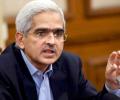
Reserve Bank of India (RBI) Governor Shaktikanta Das had stumped the market in the previous two policies - in August and in October - first with action and then with words. In August, it was the introduction of an incremental cash reserve ratio (I-CRR) to take out excess liquidity, which took the markets by surprise. In October, there was no action. Rather, what is known as "open mouth operation", Das' comment that the central bank might conduct open market operations (OMOs) by selling bonds tempered the euphoria in the bond markets after JP Morgan's inclusion of India in its Emerging Market Bond Index.

In recent years, as the number of government economic reports coming out in the weeks and months before the Survey has increased, its utility has diminished as a source of data and as the ministry's assessment of the state of the economy.

The spike in food prices at the onset of the monsoon season has corroborated the Reserve Bank of India's (RBI's) view that the fight against inflation is far from over, the State of the Economy report of the central bank said. At the same time, the report said that the country is poised to become the fastest-growing major economy in the world, notwithstanding some sequential moderation in economic activity in June. Consumer Price Index (CPI)-based inflation rate increased to 4.8 per cent in June 2023, from 4.3 per cent in May, primarily on account of an increase in food inflation.

The ministry of finance is likely to assume crude oil price to remain within $85 per barrel while estimating subsidies for the Interim Budget 2024-25 (FY25), to be presented on February 1. Brent crude prices moved up on Thursday, ending at $78.9 per barrel. Crude oil and cooking gas prices, which move in tandem, impact fertiliser and cooking gas subsidies, constituting 53 per cent of the government's total subsidies.

With land acquisition completed and infrastructure work streamlined, India's bullet train dreams are slowly, but finally, inching closer to reality.

The services sector growth in India fell to a one-year low in November on softer expansions in new work intakes and output, despite receding price pressures, a monthly survey said on Tuesday. The seasonally adjusted S&P Global India Services Business Activity Index fell from 58.4 in October to a one-year low of 56.9 in November. Despite witnessing a month-on-month decline, the rate of expansion was stronger than its long-run average.

The agreement is subject to approval by the IMF management and consideration by its executive board, which is expected in early April.
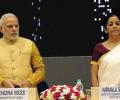
Modi, after delivering his sixth straight address to the nation on Independence Day from the ramparts of the Red Fort in New Delhi, went into a brainstorming session with Sitharaman and all top officials in her ministry, sources privy to the development said. T

India's current account deficit is expected to deteriorate in the current fiscal on account of costlier imports and tepid merchandise exports, according to the Finance Ministry's monthly economic review. The review released on Thursday by the ministry also said that global headwinds would continue to pose a downside risk to growth as crude oil and edibles, which have driven inflation in India, remain major imported components in the consumption basket. For the present, it said, "their global prices have softened, as fears of recession have dampened prices somewhat. This would weaken inflationary pressures in India and rein in inflation."

India's manufacturing sector activities lost further growth momentum and fell to a seven-month low in March as demand was constrained by the escalation of the COVID-19 pandemic, a monthly survey said on Monday. The seasonally adjusted IHS Markit India Manufacturing Purchasing Managers' Index (PMI) fell from 57.5 in February to a seven-month low of 55.4 in March. However, the latest reading was indicative of a substantial improvement in the health of the sector that outpaced the long-run series average, it said. In PMI parlance, a print above 50 means expansion while a score below 50 denotes contraction.

Sources said Wang is primarily visiting India to hold boundary talks with National Security Advisor Ajit Doval.
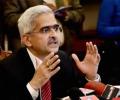
Following are the highlights of the RBI's first monetary policy statement of 2022-23 unveiled by Governor Shaktikanta Das: Policy repo rate unchanged at 4%; marginal standing facility rate & bank rate too remain unchanged at 4.25%. Monetary stance to be accommodative with focus on withdrawal of accommodation to keep inflation within target. GDP growth projection for FY'23 slashed to 7.2% from 7.8%; growth projections based on assumption of crude oil (Indian basket) price at $100 a barrel during FY'23. Inflation forecast hiked to 5.7% for FY'23 from 4.5%.

India's industrial production growth remained subdued for the second straight month and expanded by 3.2 per cent in October, mainly due to the waning low base effect while mining, power and manufacturing sectors performed well. The manufacturing sector, which constitutes 77.63 per cent of the Index of Industrial Production (IIP), grew two per cent in October, according to data released by the National Statistical Office (NSO) on Friday. The mining sector output rose 11.4 per cent in October, while power generation increased 3.1 per cent.

The banking regulator was uncomfortable with the runaway pace at which consumer credit was growing.

Industrial production contracted by 1.9 per cent in November, entering the negative territory after a two-month gap, mainly due to poor showing by manufacturing and mining sectors, official data showed on Tuesday. The manufacturing sector -- which constitutes 77.63 per cent of the index of industrial production (IIP) -- recorded a contraction of 1.7 per cent in November 2020, as per data released by the National Statistical Office (NSO). Mining sector output too witnessed a decline, shrinking 7.3 per cent.

The assets under management of the 44-players mutual fund industry stood at Rs 24.55 lakh crore in May-end from Rs 23.93 lakh crore in April-end.

Gen Z, don't shy away from expressing your ideas, and millennials, be receptive to new perspectives, suggests Sonica Aron, founder of the HR consultancy firm, Marching Sheep.
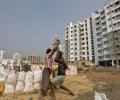
As per a Knight Frank FICCI Naredco report, a majority 69% of the stakeholders say that the residential sales will remain tepid or may even go down further in the coming six months.

Among food articles, vegetable prices surged by 69.69 per cent mainly on account of onion, which witnessed 455.83 per cent jump in prices, followed by potato at 44.97 per cent.

'Das is friendly, but he finally does what he does. The quality of engagement is very good.'

The BSE mid-cap and small-cap stocks have outperformed the benchmark Sensex in 2023-24 with about 62 per cent returns, reflecting buoyant investors' sentiment amid robust macroeconomic conditions in the country and impressive quarterly earnings reported by various firms. As per an analysis, the BSE mid-cap gauge jumped 15,013.95 points or 62.38 per cent in the 2023-24 fiscal, while the small-cap index climbed 16,068.99 points or 59.60 per cent. In comparison, the 30-share BSE Sensex raked in a gain of 14,659.83 points or 24.85 per cent during the fiscal under review.

The 21st meeting of FSDC comes against the backdrop of the economy hitting a six-year low growth rate of 5 per cent in the first quarter of 2019-20. Even some of the macroeconomic data for the second quarter does not portray an encouraging picture of the economy.

rediffGURU and financial planning expert Colonel Sanjeev Govila (retd) answers your personal finance-related questions.

Reflecting subdued global economic growth, India's outward foreign direct investment (FDI) fell by 33.3 per cent sequentially to $1.21 billion in August, compared to over $1.82 billion in July.

The UK government is under increasing pressure on Monday to review its COVID-19 vaccine protocol in place for travellers from India, after its updated rules effective from next month failed to recognise Indian vaccines under an expanded list of countries.

Retail inflation was at a 25-month low of 8.1 per cent in February.

Russian oil supplies to India will continue to flow unhindered and suppliers will come up with ways to sidestep secondary sanctions, a Russian official told Business Standard.

A 6-7 million tonnes shortfall in rice production due to a fall in paddy sowing area is likely to keep rice prices at elevated levels, adding to the inflationary pressure that the slowing economy is already grappling with. Elevated food prices, including that of cereals, had led to retail inflation reversing a three-month declining trend, to touch 7 per cent in August. Similarly, the wholesale price inflation, which declined to 11-month low, also showed price pressures from cereals resulting from wheat output being impacted by severe heat waves in some parts of the country.

Noting that the assembly election results being very disappointing is an understatement, the Congress Parliamentary Party chairperson urged party MPs to channel their disappointment into positivity for next year's general elections.

In September, sales of 125cc models - that include the Hero Glamour, Splendor, Pulsar 125, Victor Star City, among others - grew by a whopping 30 per cent over the same period a year ago to 305,615 units.
Starting today, Modi and top officials in the Prime Minister's Office will be briefed by various central ministries and departments on their plans as well as agenda for the next five years. They will also apprise the PMO of the work they have done so far in realising the agenda of government's second term in office.

Declining vegetable prices brought down the retail inflation to a 15-month low of 4.59 per cent in December and within the comfort zone of the Reserve Bank, government data showed on Tuesday. It is for the first time during the current fiscal that the Consumer Price Index (CPI) based inflation print is below 6 per cent or in the RBI's target range of 2 to 6 per cent. The central bank factors in the CPI-based inflation while arriving at its monetary policy. The inflation in December 2020 came down from 6.93 per cent in November, mainly on account of 10.41 per cent decline in vegetable prices over the year-ago period.

One hopes, though one is not optimistic, that this action to some extent corrects the lunacy which has infected our national media and has damaged our nation, notes Aakar Patel.

Imports also fell for the eighth consecutive months, down 0.75 per cent to $41.14 billion in January, widening the trade deficit to a seven-month high of $15.17 billion.

Industrial production re-entered the negative territory by contracting 1.6 per cent in January, mainly on account of the decline in output of capital goods, manufacturing and mining sectors. The output of the manufacturing sector -- which constitutes 77.6 per cent of the Index of Industrial Production (IIP) -- shrank by 2 per cent in January, as against a growth of 1.8 per cent during the same month last fiscal, as per data released by the government on Friday. The worst performance was witnessed by the capital goods sector, which recorded a contraction of 9.6 per cent during the month under review, compared to a 4.4 per cent decline a year ago.

Ravindra Jadeja's superb all-rounder show powered Chennai Super Kings to a thumping 28-run victory against Punjab Kings.
Last month, Prime Minister Narendra Modi had said that the economy is showing "green shoots" as the country emerges from the coronavirus lockdown and underscored the importance of being focussed on both life and livelihood.

Prices may go up because of higher energy costs, caused by the rise in shipping charges, with commercial vessels taking a longer route to avoid the troubled Red Sea region, the finance ministry said on Monday. Iran-backed Houthi rebels of Yemen are repeatedly attacking ships in the Red Sea. While the global economy is grappling with challenges such as sticky inflation, sluggish growth, and mounting fiscal pressure, India's external sector could face "potential risks" due to the ongoing geopolitical tensions, according to the finance ministry's report on the review of the Indian economy.
The Reserve Bank has told the International Monetary Fund (IMF) that the objective of frequent interventions in the forex market is to curb excessive volatility, dismissing the Fund's rationale for reclassifying India's exchange rate regime. The IMF, following the Article IV consultation with the Indian authorities, reclassified the status of the exchange rate regime to "stabilised arrangement" from "floating" for period between December 2022 to October 2023. India's Executive Director at IMF K V Subramanian and Senior Advisors Sanjay Kumar Hansda and Anand Singh questioned the selection period adopted by the Fund for analysis and also reclassification of the country's exchange rate regime.
